How Is IQ Measured? Understanding Average and High IQ Scores
In this article we will explain how IQ is measured, what different IQ scores mean, and the Limits of IQ measurement.
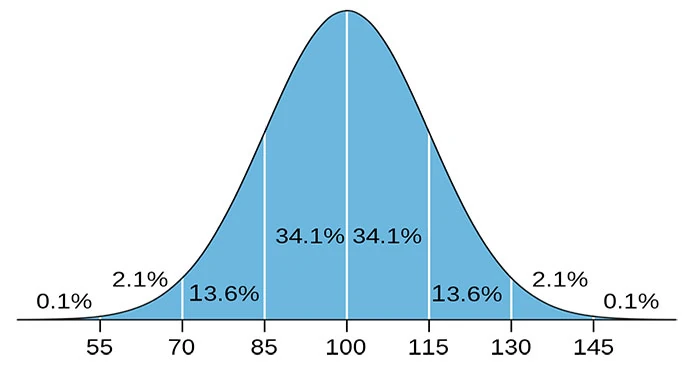
IQ scores are determined by standardized tests. The results are then compared to a bell curve to see how a person’s score compares to others.
The bell curve follows some basic statistical rules:
- The Average: An IQ score of 100 is defined as the center and middle point of the curve.
- Standard Deviation: It shows how much a score differs from the average. For most tests, one standard deviation is 15 points.
- The Majority of the Population: About 68% of people score within one standard deviation of the average (between 85 and 115). About 95% of people score within two standard deviations of the average (between 70 and 130).
- The Extremes: Scores below 70 or above 130 are rare, making up only about 2.2% of people at each end of the curve.
IQ Score Classifications
Common categories include:
Above 145: Very gifted
Some refer to this as a 'genius IQ', but there is no official scientific definition for that term. True genius is usually seen in exceptional creativity, innovation, or artistic talent, not just test scores.
130–145: Very high IQ
This range means exceptional intellectual ability. About 2.1% of people score here, and they can qualify for high-IQ organizations like Mensa International.
115 - 130: High IQ
Indicates solid analytical and reasoning skills. People with these scores are statistically linked to stronger educational achievement and better career opportunities.
85–115: Average IQ
Usually means typical reasoning, learning, and problem-solving skills. Most people score in this range and successfully manage education, careers, and daily life.
70–85: Below average
Indicates slightly lower-than-average reasoning skills, although individuals in this range still fully maintain independent daily living and practical skills.
Below 70: Low IQ
People with such scores may have learning difficulties and may benefit from additional educational or developmental support.
The Limits of IQ Measurement
IQ tests measure some thinking skills, but they do not cover all parts of human intelligence. Creativity, emotional skills, practical knowledge, and motivation are also major contributors to success. And these skills are not in the scope of IQ tests.
As Harvard researcher David Perkins once said:
"A high IQ is like height in a basketball player. It's very important, all other things being equal. But all other things aren't equal. There's a lot more to being a good basketball player than being tall, and there's a lot more to being a good thinker than having a high IQ."
IQ scores can also be affected by factors such as education, health, environment, and life experiences.
Can Cognitive Skills Be Improved?
Although IQ is relatively stable over time, many mental skills can be improved. Research shows that regular exercise, quality sleep, reading, and learning new skills or languages can all help keep the brain active and healthy.
More useful resources:
» What Famous People Think About IQ?» People With the Highest IQ
» Is IQ Important?
» How to improve your cognition and brain function?
» What was Einstein's IQ?